
Mental health is an essential part of our overall well-being, yet it is often overlooked in our daily lives. At Worlem Adzimah Foundation, we believe that mental health awareness is the first step toward building healthier individuals, families, and communities.
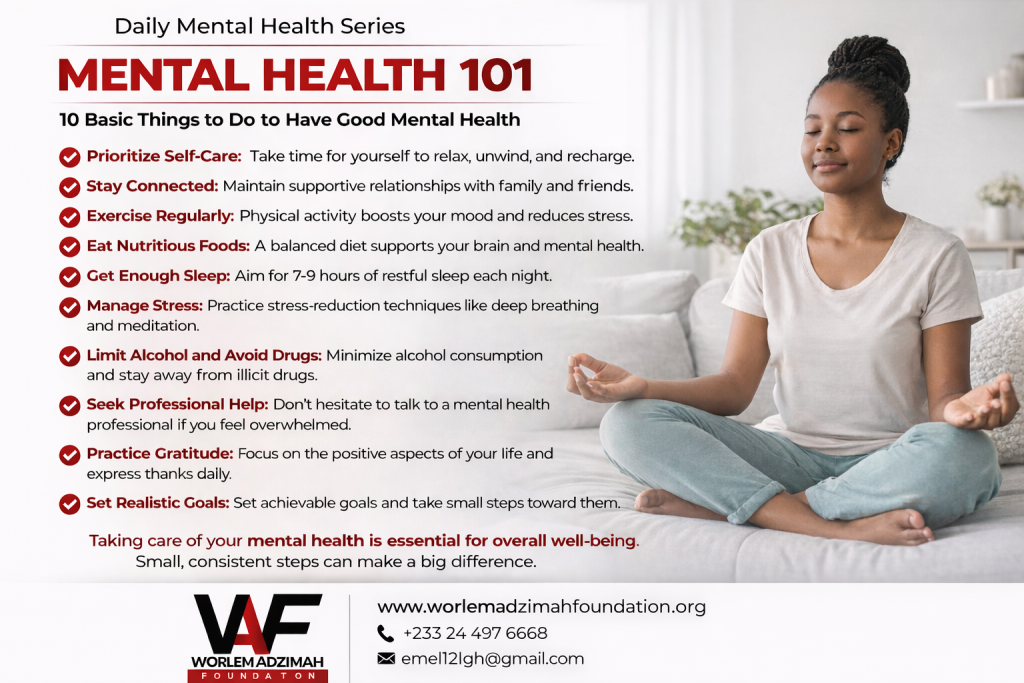
As part of our Daily Mental Health Series, we introduce Mental Health 101—a guide highlighting simple, practical habits that anyone can adopt to improve their mental well-being.
Taking care of your mental health does not always require complicated steps. Small daily actions can make a significant difference in how we feel, think, and function.
1. Prioritize Self-Care
Self-care is not selfish—it is necessary. Taking time to relax, unwind, and recharge helps restore your emotional balance. Whether it’s reading a book, listening to music, or simply taking a quiet moment for yourself, self-care can help reduce stress and improve mood.
2. Stay Connected
Human connection is vital for mental health. Maintaining supportive relationships with family, friends, and loved ones helps create a strong support system during challenging times.
3. Exercise Regularly
Physical activity is not only beneficial for the body but also for the mind. Exercise releases endorphins, which help boost mood, reduce stress, and improve overall mental wellness.
4. Eat Nutritious Foods
What we eat can influence how we feel. A balanced diet supports brain function and contributes to better mental health. Foods rich in vitamins, minerals, and healthy fats can positively affect mood and energy levels.
5. Get Enough Sleep
Sleep is essential for mental and emotional health. Adults should aim for 7–9 hours of quality sleep each night to help the brain recover and function properly.
6. Manage Stress
Stress is a natural part of life, but learning how to manage it is important. Techniques such as deep breathing, meditation, mindfulness, or relaxation exercises can help calm the mind and reduce anxiety.
7. Limit Alcohol and Avoid Drugs
Excessive alcohol consumption and drug use can negatively affect mental health. Limiting alcohol and avoiding harmful substances can help maintain emotional stability and clarity.
8. Seek Professional Help When Needed
There is strength in seeking help. Speaking with a mental health professional, counselor, or therapist can provide valuable support, guidance, and tools for managing emotional challenges.
9. Practice Gratitude
Focusing on positive aspects of life can improve emotional resilience. Practicing gratitude—whether by journaling or simply reflecting on things you appreciate—can help shift your mindset toward positivity.
10. Set Realistic Goals
Setting achievable goals provides direction and motivation. Breaking large goals into smaller steps can make progress feel more manageable and rewarding.
Small Steps, Big Impact
Mental health care is a continuous journey. Small, consistent habits practiced daily can lead to meaningful improvements in emotional well-being.
At Worlem Adzimah Foundation, we are committed to promoting awareness, education, and support around mental health issues in our communities. Through our programs and advocacy, we aim to break stigma and encourage open conversations about mental well-being.
Taking care of your mental health is one of the most important investments you can make in your life.
For more resources and mental health education, visit
www.worlemadzimahfoundation.org